
Community First Development is a unique First Nations’ organisation with diverse knowledge and expertise.
We are actively involved in First Nations’ communities; and established as a thought leader in First Nations’ community and economic development, research, monitoring and evaluation. We believe there are valuable connections between these streams of work.
Our research focuses on First Nations-driven, Participatory Action Research that results in meaningful and timely change for our people and communities. Our research activities are built into our community development activities and are conducted in-house, ensuring that learnings can be quickly acted on and used to strengthen our community development practice.
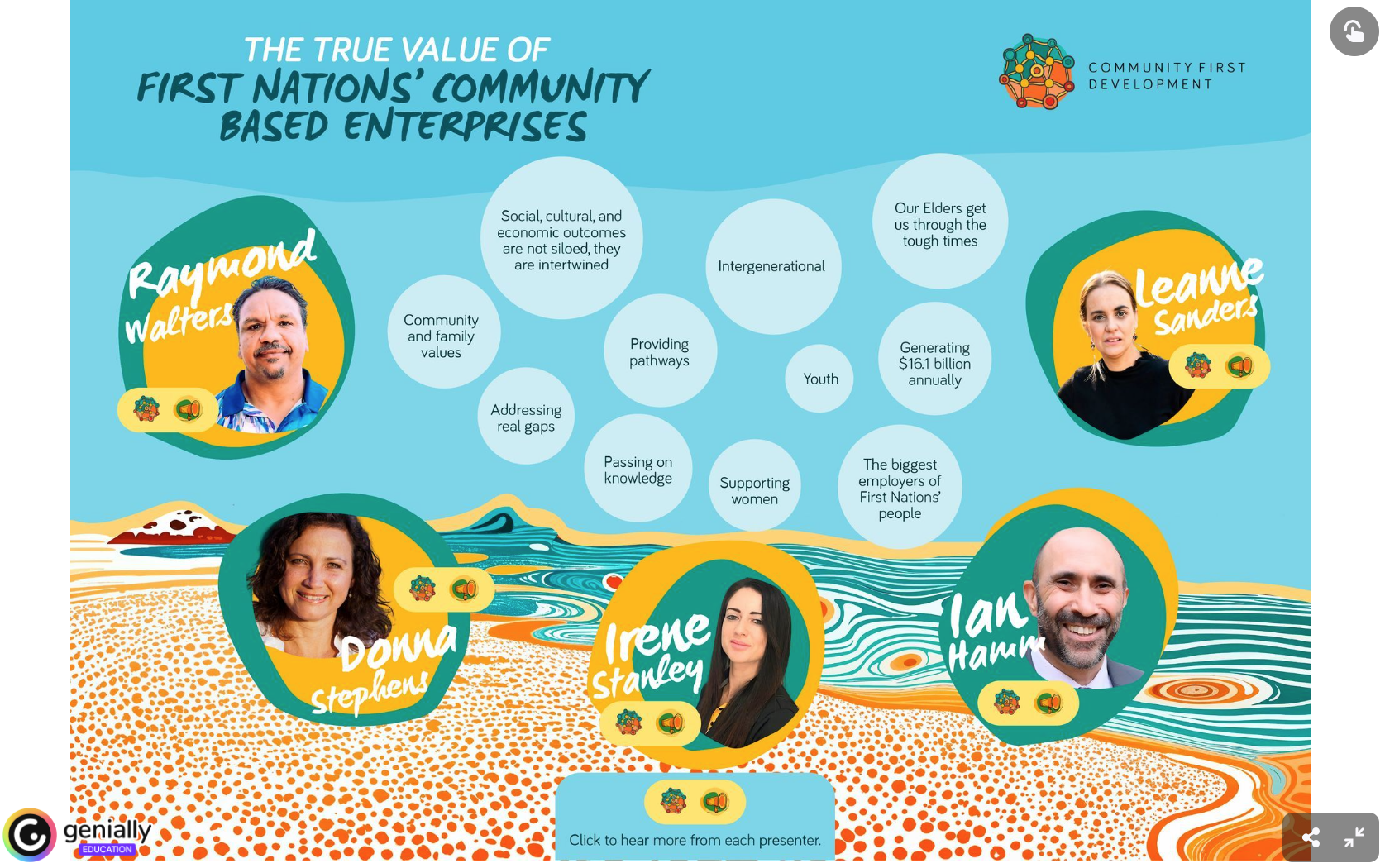
ENGAGE WITH OUR LATEST RESEARCH AND EVALUATION
Click on the poster below to explore the interactive version, where you can listen to audio highlights from our recent event.
RESEARCH AND PRACTICE REPORTS



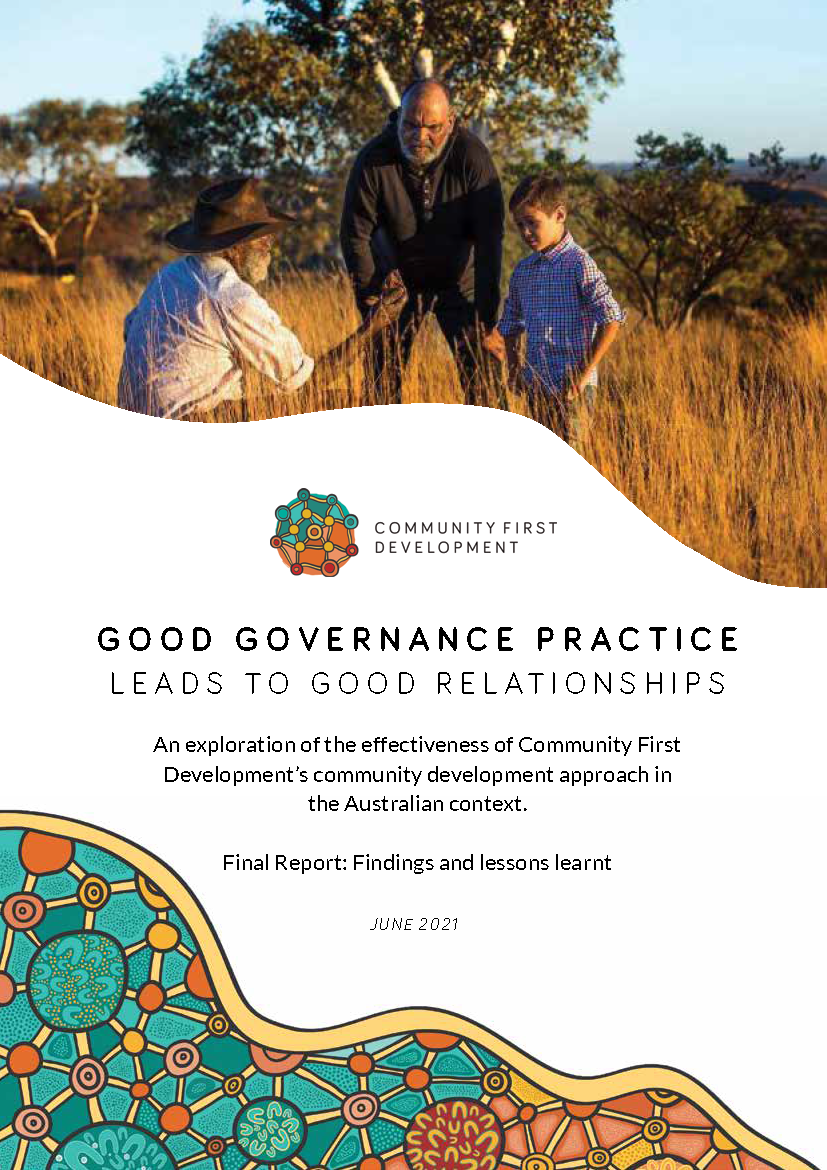

In 2018, Community First Development launched its first action research project that aims to evaluate the effectiveness of its community development approach, and explore why self-determination, leadership and governance are important to Aboriginal and Torres Strait Islander people and communities.
IMPACT REPORTS

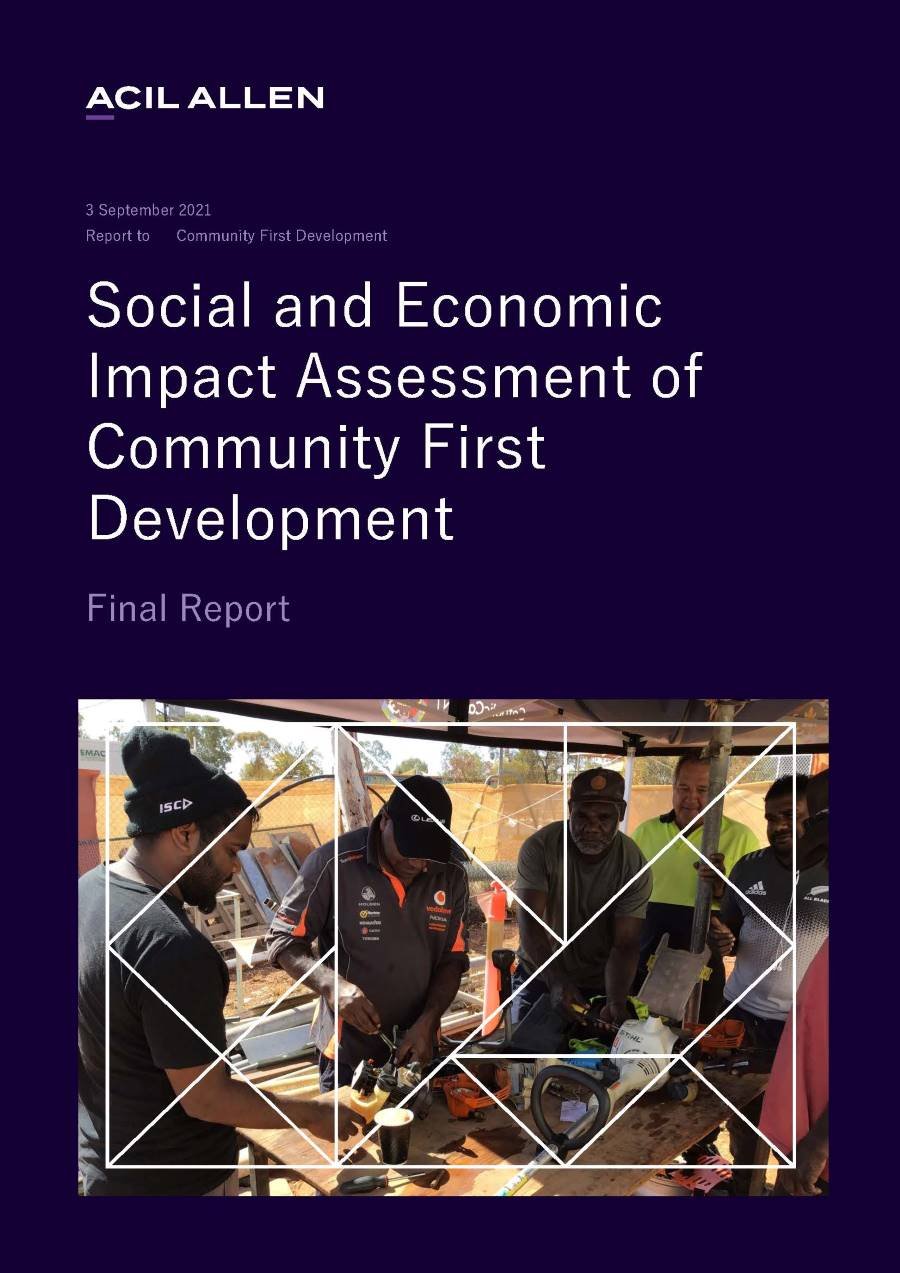

This three-year macro analysis provides an opportunity to take a step back and see the cumulative effect of our community development activities over the past three years, and how strong and capable communities are addressing the needs of Aboriginal and Torres Strait Islander people across Australia.

CASE STUDIES


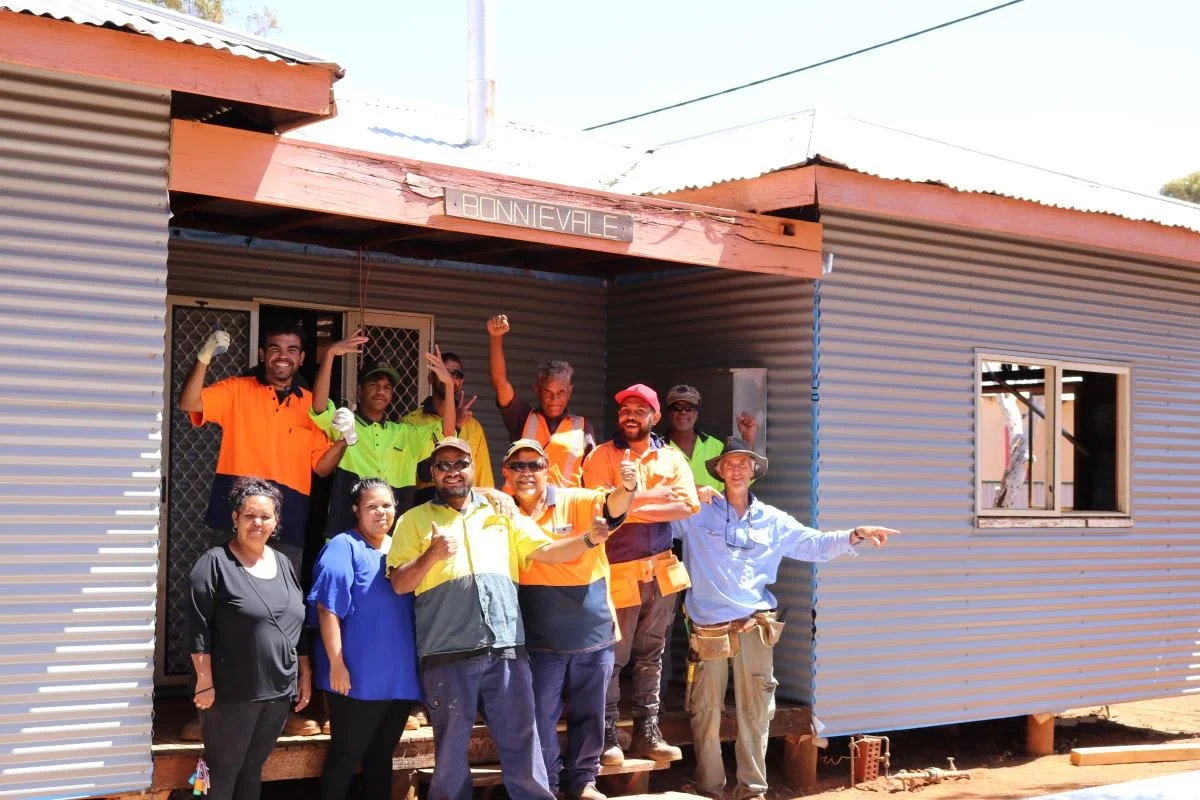


AMHC’s vision is for all Aboriginal women and children to live safe and healthy lives free of family violence. This case study touches on why this is important to them, as well as their unique governance that reflects that they exist in two worlds.

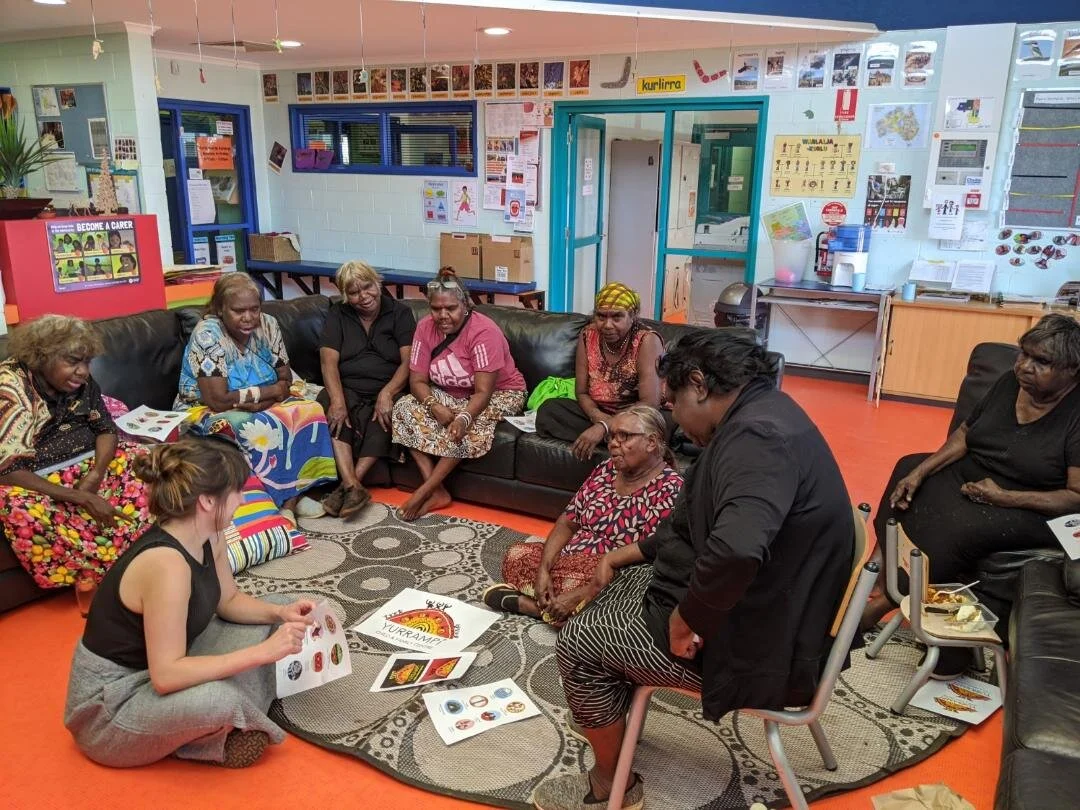

MYMAI support the growth and development of musical and artistic talent in the Midwest region, and create opportunities to showcase First Nations’ talent.
PRACTICE RESOURCES
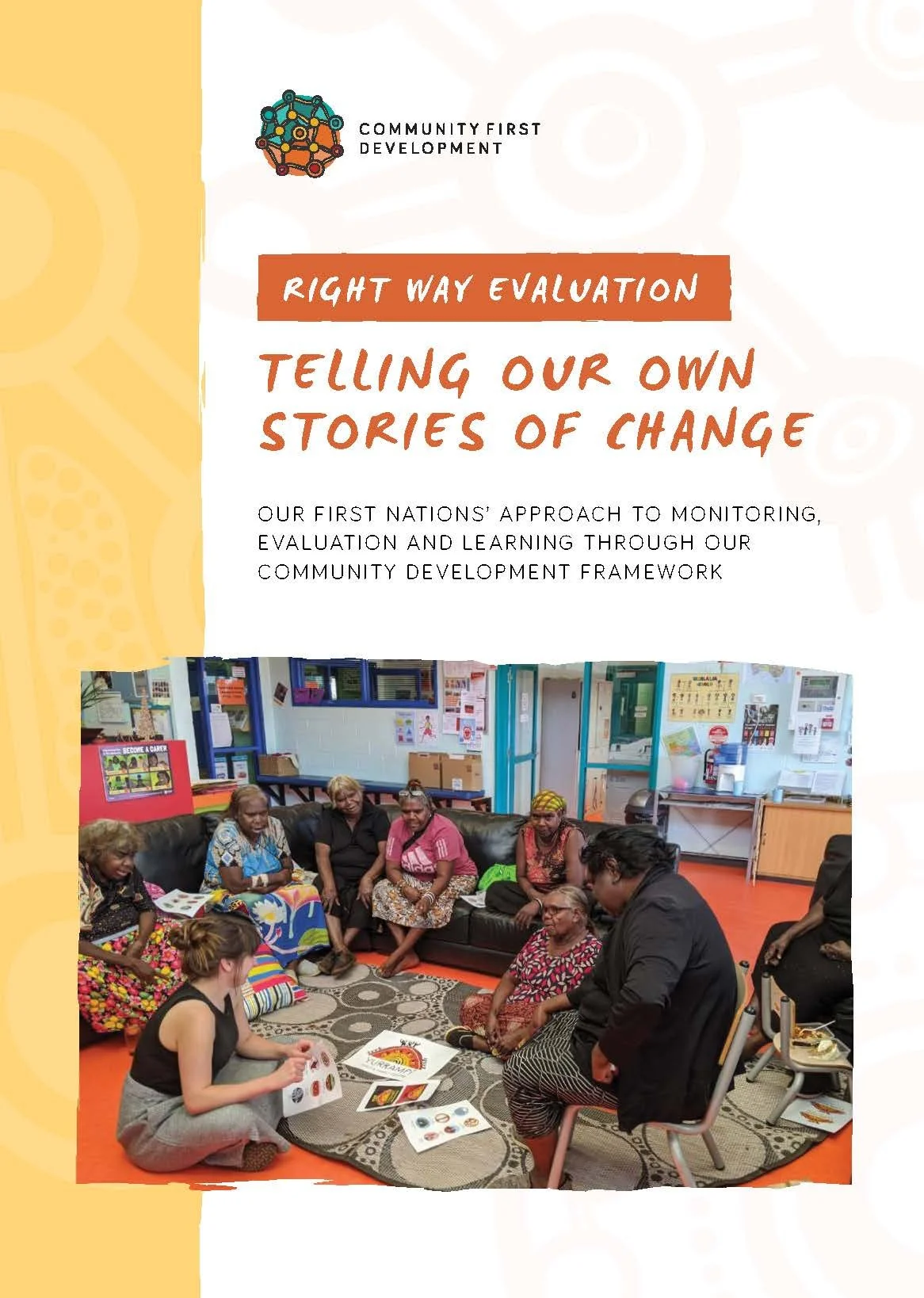
We have designed an inclusive, culturally safe and relevant monitoring and evaluation approach to contribute to better outcomes for First Nations peoples. This approach is embedded into all of our community development activities.
Our journey to continually strengthen our monitoring, evaluation and learning provides a model that demonstrates the benefits of investing in evaluation capability.
We have found it reinforces First Nations' peoples’ rights to self-determination through leading the evaluation design and delivery; it increases transparency to program participants; it strengthens local governance structures; and enables immediate lessons from evaluations to be incorporated in program delivery. In addition, it ensures that research capacity is strengthened internally among our team and within the communities working with us through evaluation, reflection and specific research projects.
We believe our evidence based approach and over 20 years of experience working with and for First Nations’ people places us in a solid position to influence the design, delivery and evaluation of policies and programs that will impact them.


We all love a good yarn, and at Community First Development we are no exception to this. Yarning is the key and an important element when it comes to First Nations’ research.
As First Nations’ people we share stories about our ancestors and for other people, like our grandchildren. Stories also keep us up to date of what is happening in our communities. There is a depth to yarning that is embedded in spirituality, and acts as a connector to the past, present and future.

As part of the Project Working Group of Aboriginal consultants, we helped to develop an ethical protocol to assess evaluations that involve or affect First Nations people and communities.

Until recently, Community First Development had framed its work through a linear ‘Story of Change’, a program logic and visual representation of the social and economic impact the organisation achieves.


